Feeds:
Posts
Comments

Magnus Carlsen is the current world chess champion. He’s the best in the world at something. Not that many people can make that claim, can they?

Magnus Carlsen at FIDE World Chess Championship

Then again, there are lots of things in the world that you could be best at. Whistling, lemur training, lemon-pie-making, juggling, lying, rock climbing, sleepwalking. Somewhere in the world, there is “the best in the world” at each of these pursuits. Maybe my chances of being best at something are not so bad, after all? Maybe I just have to find the right thing…

Consider the modern pentathlon. In this sport, athletes compete in five events—fencing, shooting, swimming, running, and horse jumping—to achieve the overall best combined score. The winner need not be the best at any one specific event, but must have proficiency in all five.

Let’s say I am in the 99th percentile in all five events: very good, but not world class. [Here I am assuming that I’m in the 99th percentile of all humans, not just people who fence.] Taken individually, I wouldn’t have a prayer of making the Olympics. For example, the 99th percentile in épée fencing would still mean that there are

(0.01)^1 * 7,000,000,000 = 70,000,000

people with a similar proficiency around the world. Doesn’t seem that impressive, does yet? But I’m in the 99th percentile in all five events, right? So in reality there are only

(0.01)^5 * 7,000,000,000 = 0.7

people like me. That is, there’s just me. I’m probably the best at this combination of events. I should medal in the modern pentathlon.

And this brings me to my broader point. If you can think of five events in which you are in the 99th percentile individually, then in all likelihood you would be world champion if these events were combined into a single composite event. For those scoring at home, here’s where the number five comes from:

(0.01)^N * 7,000,000,000 = 1 (a single champion)

N ln (0.01) = ln [1/(7 x 10^9)]

N = [–ln (7 x 10^9)] / [ln (0.01)] = 4.9 ≈ 5

Let’s take my own skill set and see how I would do. I am certainly in the 99th percentile when it comes to physics. (Remember, I am comparing myself to the general population, not just physicists. I would never claim to be in the 99th percentile of people with physics PhD’s.) I am probably in the 99th percentile when it comes to chess (considering that I am in the 85th percentile for tournament players based on an 1800 rating). But am I good, really good, at anything else?

I will claim without proof that I am also in the 99th percentile (among the general population) in the following additional skills:

  • Knowledge of classical music
  • Playing the recorder
  • Geometry

Remember, I am not claiming any particularly high proficiency in any of these things. I just claim a 99th percentile rank in the general population. And individually, any one of these skills would only put me in the company of some 70 million others.

But now: make a hybrid event, where competitors have to take a battery of tests on physics, geometry, and classical music, then perform on the recorder, and then play chess… I believe I may do well in such an event. I might even be world champion.

Of course, nothing is that simple. I have ignored the fact that some of these skills may be correlated. Anyone who can play the recorder will probably also know about classical music. And many physicists will also be good at geometry. This means that my competition will be stiffer than I suppose, since if the events aren’t mutually exclusive then I’ve calculated the probabilities incorrectly. But I can improve my chances by making the five events as disparate as possible. I might change “Geometry” to “Movie Trivia”, for example.  My chances of becoming world champion would thereby be increased.

If you think that “99th percentile” is too high a bar, we could lower it to 90th percentile. Most people are in the top 10% at several things. Redoing our calculation, we get N = 9.8 in this case. So if you can find ten things you’re fairly good at and combine them, you too can be a world champion.

Of course, you also have to convince the Olympic governing body that that particular concatenation of events is worthy of a medal. But hey, that’s your problem.

I have some geometry to do.

I liked this post so much (from Sean Carroll at CalTech) I couldn’t help sharing:

http://www.preposterousuniverse.com/blog/2014/06/30/why-the-many-worlds-formulation-of-quantum-mechanics-is-probably-correct/

multiverse-4

Screen Shot 2014-07-22 at 2.00.36 PM

Photo credit: brusspup

Recently I came across the following “optical illusion” on the normally good website I Fucking Love Science:

http://www.iflscience.com/brain/cycloid-optical-illusion-will-boggle-your-mind

I encourage you to read the article and think about the video (otherwise the rest of this post will be less than illuminating).

Supposedly, there is an “optical illusion” in the video because you think there’s a wheel when in “reality” the dots are moving linearly.

This is bullshit.

This is not an illusion. The dots are moving linearly, that’s true. But there is also a wheel. If this causes you cognitive dissonance, so be it. It is not a paradox, however. It is the case that some wheels, when spinning inside other wheels, have points on them which travel linearly.

I admit, this is a field of mathematics close to my heart. Much of my recent work has involved geometric phase, which has connections to Spirographs, epitrochoids and hypotrochoids as mentioned in the IFLS article. I have battered notebooks with over 500 pages of algebra devoted to such things. This is something I know something about.

One way to see that this isn’t an illusion at all is to watch it being drawn. Go to the following Spirograph applet:

http://www.personal.psu.edu/dpl14/java/parametricequations/spirograph/

Play around a little bit. Then create the following specific Spirograph (which is exactly the one in the IFLS “illusion”):
Radius1 = 60
Radius2 = -30
Position = 29
Velocity = 8
If you need to, CLEAR the picture, input the above parameters, and hit DRAW. Hit DRAW again to watch it all over again.

There’s no illusion. A circle is rotating inside another circle. Simultaneously, a particular part of that circle is traversing a straight line. This comes as a surprise to many people: there’s a frisson of incredulity from the idea that your motion can be simultaneously linear, but curved as well. But there’s an easy explanation. Your motion is different in different frames of reference.

Consider an ant on the wheel. With respect to the center of that wheel, he just orbits in a circular manner. But with respect to us, outside of the contraption, he moves back and forth along a single line. This is not an optical illusion. It’s the relativity of geometric shapes.  And I think that’s even cooler than some cognitive trickery.

With the World Cup in full swing, I thought I’d try to tackle that age-old question: why do so many Americans hate soccer?  Maybe if I can get to the bottom of that question, I can help some Americans find joy in the “beautiful game”…at least until World Cup 2014 is over.

First, a little context.  I am an American who loves sports of all kinds but, I will admit, I hated soccer when I was younger.  The reasons for this are many.  I like to think that I’m typical in my soccer-aversion—typical of many other Americans—and this is what gives me some credibility in writing this blog post.  But what’s interesting is that I eventually came to enjoy soccer, and it is partly the journey from hatred to enjoyment that I wish to share with you.

Why did I not like soccer?  I can think of at least 4 reasons:

1)      Turnovers.  To an American immersed in the culture of American football (henceforth just called football) and basketball, it seems as though (in soccer) teams commit turnovers every five seconds or so.  A little bit of background: a turnover (in any sport but soccer, really) occurs when one team gives up control of the ball.  Normally, in most sports, a turnover is a major thing; statisticians keep track of turnovers, and the team that “turns the ball over” more loses most of the time.  In basketball, a turnover often leads to a “fast break” (an exciting play usually leading to a score).  In football, turnovers are catastrophic; fumbles and interceptions are often the most exciting plays in a game.  They represent huge reversals of fortune.  A football team which commits six turnovers in a game will almost always lose.

So imagine an American kid like me, watching soccer on TV for the first time (something that didn’t happen until I was almost in college, by the way).  I see Spain playing Belgium in the World Cup.  Spain has the ball…but within five seconds Belgium has the ball…but then within five seconds Spain has the ball…ad infinitum.  An American football announcer could not possibly keep up: “Spain turns it over!  Belgium kicks it…and turns it over!  Now Spain has it but…oh no, they’ve turned it over!  Belgium has a chance here…nice pass to Ceulemans…but he turns it over!”  If you grew up watching football and basketball, this turnoverfest is maddening.  It appears random, like pinball.

What I failed to realize, back in 1986, is that soccer is a game of averages, of field position, of drift velocity.  It doesn’t really matter in soccer if the ball is “turned over” often.  As long as (on average) the ball tends towards one end of the field or the other, one team will have an advantage.

drift-velocity

Soccer is a game of drift velocity.

It’s like an electron in a copper wire, under the influence of an electric field: the motion of the electron is mostly random, but over time it tends to move in the opposite direction as E.  If Brazil has a better team than Cameroon, then—despite the large number of apparent “turnovers”—the ball will tend to drift towards the Cameroonian goal.  This drift velocity was apparent in the final stats from Monday: Brazil had the ball 54% of the time, and had 19 shots on goal (compared to 12).

I’ve learned to enjoy soccer, in part, by turning off my instinctual aversion to turnovers.  When I watch soccer now, I am watching the semi-random kicking of an electron, which will tend (over time) to drift in one direction or the other, due to the superior ability of one of the teams.  It’s a game of statistical mechanics; it’s irrelevant whether you keep the ball continuously for any particular length of time.


2)      Low scoring.  To an American used to basketball scores like 95-92, or football scores like 35-28, soccer seems boring, in part because scoring is so rare.  But the “low scoring” of a soccer game should be taken in context.

For one thing, football isn’t as high scoring as you might think.  The average number of points scored by American football teams in 2013 was 23.4.  Consider that a touchdown (analogous to a goal in soccer) is worth a de facto 7 points (since the extra point is almost always successful).  To compare football scoring to soccer scoring in any meaningful way, football scores should be normalized by dividing by 7.  A score of 35-28 is analogous to a soccer score of 5-4.  High scoring, sure, but not overly so.  And a defensive battle like the Panthers/49’ers game last November, which ended with a Carolina victory of 10-9, is much like a soccer score of 1-1.

As for basketball, well, goals come so often that (individually) they lose almost all meaning.  I like basketball, but a soccer goal is much more exciting for being so rare.  Of course, it’s possible to make scoring too rare: I imagine that a game of Ullamaliztli was pretty boring indeed.  You can only use your hips, and have to get a 9 pound ball into a tiny goal?

Tlachtli

The losers are executed.

Which brings us to a tangential point.  Basketball is a very pixillated sport, since the “quantum of scoring” (one point) is so meaningless.  In soccer, the quantum of scoring (one goal) is a much, much bigger deal.  This makes soccer goals more entertaining, on a 1-1 basis, than  basketball goals; but it also means that you’re measuring the worth of individual teams with a very blunt instrument.  A football victory, 10-9, becomes a draw in soccer (when normalized) because the goals are not finely-tuned enough to “detect” a difference in such evenly matched teams.  Whether this is a good thing or not is up to debate.


3)      Red cards.  To an American, penalties are a common and necessary part of having a physical game.  But in soccer, the penalties seem very out of proportion to the offenses committed.

Consider a tackle in soccer.  It’s OK to tackle the opponent if I get my foot on the ball.  But if I miss the ball, I’m going to get penalized.  And if the referee thinks that I was trying to trip the opponent on purpose (a very subjective thing), I’ll get a yellow card waved in my face.  Two yellow cards equals a red card, and I’m out…and my team is now down one player.

Seriously?  Down one player for the entire game?

The same thing happens in ice hockey.  It’s called a power play.  And when the other team scores, the penalized team gets the player back.  The power play ends, and everything is fair again.  Why can’t it be like that in soccer?

I’ve always felt that your entire team losing a player for the rest of the game should be the nuclear option of penalties, such as if one of your players bites another on the shoulder.  It shouldn’t be used against a player that commits two ticky-tack penalties.  This is especially true in an era when diving (called flopping in the USA) has become a cottage industry.  Why not dive, when you have a good chance of ejecting a player from the game entirely?

o-LUIS-SUAREZ-570

In football, you have to do something egregious to get tossed out of a game, like throwing a punch.  Even then, your team is not down a player; a substitution is allowed.  In NBA basketball, you can commit up to 5 personal fouls; you’re tossed out on the 6th (this is called “fouling out”).  Again, when you foul out, your team isn’t penalized unduly…they put in someone else to take your place.

How does an American learn to accept the harshness of the red card system?

With difficulty, I admit.  I still don’t like it.  But I sort of understand it.  After all, how else can you penalize a team in a game in which there’s no stopping of the clock?  If players were allowed five, or four, or even three yellow cards before being tossed out, I daresay there would be more tripping, more pushing, more dangerous plays…and more injuries.  Then again, there would be less diving…


4)      Offside.  This might be the hardest aspect of soccer to fathom, to a person raised on Michael Jordan fast breaks and Dan Flutie Hail Mary passes.  Why do you penalize a team for having a player in scoring position?  Get rid of the offside penalty (the idea goes) and scoring would go up, and the number of exciting plays would increase.

Oh, who am I kidding.  I still hate the offside rule.

“But wait!” the soccer aficionado says.  “You get rid of offside penalties, and people will just park in the goal, waiting for a ball.  What’s the excitement of that?”

Um, that happens already.  It’s called a corner kick.  And corner kicks are exciting.

Sure it would change the game.  There would be no more beautiful offside traps.  Instead, there would be fast breaks.  Which is more likely to end up on a highlight reel: a well-executed offside trap, or a well-executed fast break?  I’ll let you decide.

Which brings me to soccer’s flaws (yes, it has flaws, just like every game and sport does.)  Not only should the offside rule be tossed out (or at least relaxed), but shootouts to decide a game are ridiculous.  Why?  Consider that a shootout contest has little relation to the actual game of soccer.  It is, if you will, a different (but related) sport entirely.  Settling a game with a shootout is like settling a basketball game with a free-throw shooting contest.  Why anyone thinks that shootouts are a good idea is anyone’s guess.  Sure, they can be exciting…but settling a soccer game with a spin of the roulette wheel would be “exciting” too—that doesn’t mean we should actually do it.  Just have extra periods until someone scores a golden goal.  And if you’re concerned with players getting too tired, well…there are a lot of players sitting over on that bench.  Don’t you think some of them would like a chance to play?

Ultimately, I like soccer, despite its flaws.  I’ve gotten used to the offside rule; I recognize it as a rule that purposely rewards passing and open-field play, at the expense of shots-on-goal.  It’s a choice, to make soccer a particular kind of game, no better or no worse than the (different) game you’d get without the rule.  Similarly, I’ve learned to embrace the shootout: they are rare, after all, and only occur after an extra period has failed to designate a winner.  In such a case, the teams are so evenly matched that we might as well use a flip of the coin.  And we’ll call that coin flip a shootout.

Note: I’ve made no mention of baseball in this discussion.  The reason?  Come on.  Baseball is just boring.

*********************************************************************************************

If you enjoyed this post, you may also enjoy my book Why Is There Anything? which is available for the Kindle on Amazon.com.

sargasso

I am also currently collaborating on a multi-volume novel of speculative hard science fiction and futuristic deep-space horror called Sargasso Nova.  Publication of the first installment will be January 2015; further details will be released on FacebookTwitter, or via email: SargassoNova (at) gmail.com.

[Note: this is the article that I wish Nate Silver would write.  He’d be so much better at the number crunching.  Of course, he’s also paid a lot more.]

I’m tired of hearing pundits spew their opinions about this, that, or the other.  Let’s face it, most people don’t know anything.

Of course, that includes me, but hey: this is my blog.

I’m using hyperbole; it’s true.  And yet in a country where 9% of people think that space aliens may have caused the disappearance of Malaysia Air flight 370; in a country where 55.56% of Supreme Court justices are completely ignorant about the First Amendment; in a country where sizable numbers of people believe in a 10,000 year-old Earth, and where numerous people doubt facts like global warming, evolution by natural selection, and the supremacy of Matt Damon…in such a country, how can you really take anyone seriously?

OK; I take Neil deGrasse Tyson seriously.  But he’s earned it.

People (of every political ideology) spew forth talking points without any facts to back them up.  Hell, they spew forth talking points without any justification at all.  I have liberal friends who are against GMO foods…even though there is no reason to think they could ever be harmful, and in fact have already saved millions of lives.  (Trivia question: how did Norman Borlaug save a billion people from starvation and subsequently win the Nobel Peace prize?  Answer: genetically modified wheat.)

On the other side, all kinds of nifty-sounding talking points spew from the conservative font, again without even a shred of justification other than “well, that sounds right”.  For example, people claim that less government is good.  Shrinking government is a goal of Tea Baggers.  “Democrats want more government, Republicans want less government…everyone knows that.”  It’s become a cliche, and people don’t even question it any more.

But this is the information age.  We don’t have to rely on our gut feelings, or even our supposed “knowledge”, to evaluate claims like “less government is good”.  We have data.  Why don’t people look at the data and then make up their minds?

I’ll tell you why: because looking at data is hard work.  Let’s face it; most people just can’t do it.  Most people want to be told what to believe.  But I just got tenure, so I have some time.  Let’s try to get to the bottom of this.

It didn’t take me long to find this website, which has nifty (exportable) data on all kinds of economic indicators.  Hey, look, the USA is ranked 12th in economic freedom out of more than 165 countries.  Yay!  We’re doing OK.

What about the size of government?  This is harder to quantify, since it means different things to different people (for example, many Republicans want to “reduce” the size of the US government without touching our defense budget, which is a little like trying to lower world sea levels by draining the Mediterranean Sea).  However, the indicator “Gov’t Expenditure % of GDP” seems pretty good to me.

How does the USA do here?  Do we have a “bloated, huge, nanny state?”  Our spending is 41.6% of GDP.  This makes us rank 47th in this indicator, so about the 72-percentile.  We have a “bigger” government than about 72% of the countries on the list.

Who’s ahead of us?  The supposed “socialist” states are (Norway, Sweden, Findland, Denmark) of course.  Everyone “knows” they are entirely nanny states.  Also: France, the UK, Germany.  The usual suspects.  Liberal, bloated, big government monstrosities.

But also: Cuba!?  Libya!?  Bosnia!?  Iraq!?  Malta!?

Maybe Cuba fits well into the narrative.  Cuba is a Communist country, so of course the commies have huge governments.  (I personally think Cuba is an outlier, since its GDP is pitifully small).  But what about other Communist states?

Hmm.  The narrative is starting to break down.  China’s government spending is about 23.9% of its GDP, almost half the size of the US.  The commies in red China are spending half of what we spend.  Vietnam spends about 30.9% of its GDP.

The talking point that the USA has become a “bloated nanny state” doesn’t hold water.  We’re in the top one-third of spenders, it’s true; but our defense budget is Brobdingnagian to say the least; if you plotted “non-defense government spending as % of GDP” our rank would be much lower.  (Note: I lack the skills to do this…feel free to do so yourself.)

But all this is distraction.  Ultimately, I don’t even know if big government is inherently bad or good, and more importantly, you don’t either.  Admit it.  You’re just guessing.

But we don’t have to guess.  We can try to understand the data a little bit more.

It didn’t take long for me to stumble on the cute Where-to-be-born index, a kind of “happiness index” which takes multiple factors into account like quality of life, health, economics, and so on, in order to rank countries based on where you’d prefer to be born.  (Admit it: you’d rather be born in Australia than Bangladesh.)  So hey, I know how to use Excel: let’s plot Size of Government vs. Where-to-be-born and see if there’s a correlation!

Correlations

Firstly: there’s not much of a correlation (the R^2 value is only around 0.17).  This is not surprising; the size of government has little to do with anything.  (It certainly shouldn’t be the entire frakking basis for a political movement.)  But what correlation there is, is positive, meaning that as governments get bigger, people tend to get happier.  All the Viking countries are in the upper right.  And those Scandanavians are doing well, dammit!

Some countries stand out.  Russia and China are lower and to the left of the USA, meaning they have smaller governments (is that surprising?) but are also more miserable.  Cuba, though, is a huge government spender…why is that?  Also, what’s the deal with Singapore?  They’re happy and (apparently) almost an anarchist state.  Tea Baggers take note: emulate Singapore.

The main idea I want you to get out of the graph is this:  there’s a lot of noise there.  You can’t really draw any conclusions.  If you want to say that “Big Government Bad!” in the same way that Tarzan says “Fire Bad!” you’d better have some data to back up your claim.  And finding such data is, well, hard work.  Good luck.

And now I’d better get back to studying something I know about: physics.


Theology?

Picture1

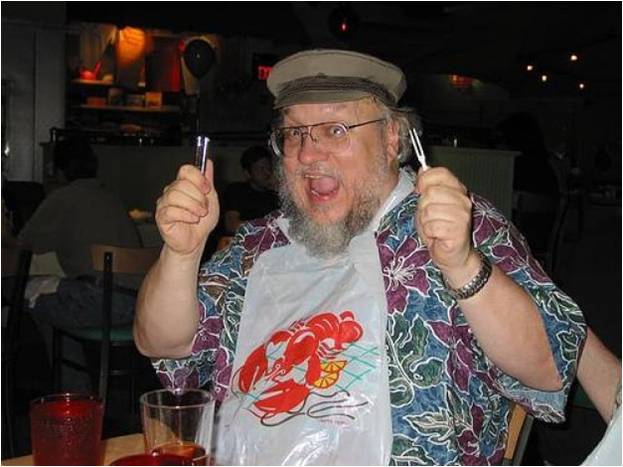
grrm2

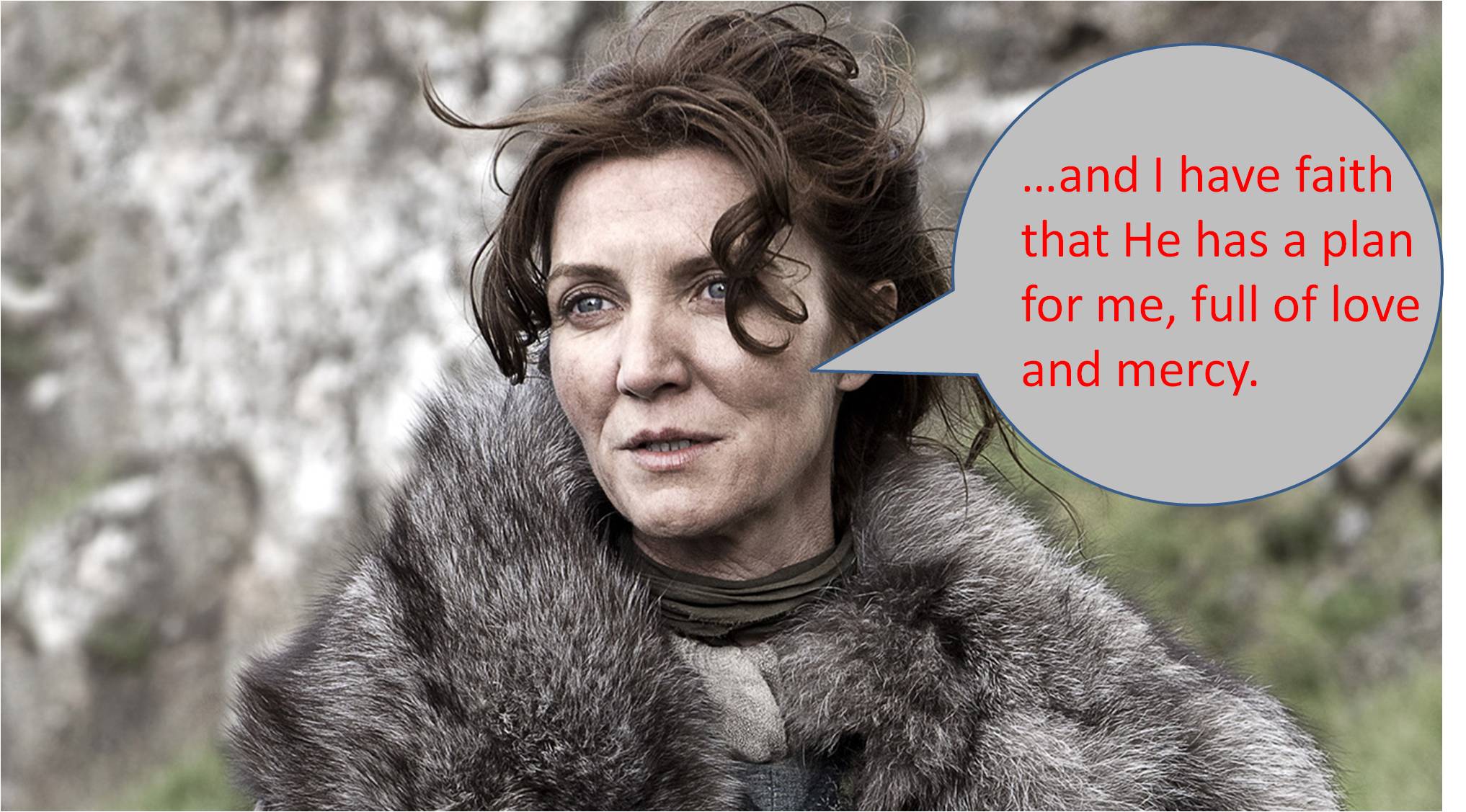
grrm3

What is art? Why do I enjoy Bartok’s Concerto for Orchestra, yet my 12-year old son thinks it is wretched? Why are the first three Song of Ice and Fire books great, but the last two are mediocre at best?

I’m sure that there’s a long history of the philosophy of art, and I’d love to quote it here to give you some insight. Unfortunately, this is a subject that I know nothing about. Nothing. Literally. I haven’t even googled “philosophy of art” to see what comes up.

That’s because I already have my own theory. I share it now because I have enough hubris to think that it may speak to you, too.

In a nutshell: with art we want to see patterns, but also be surprised and have our expectations subverted.

Now, art has more purpose then what I’ve just described. Art can educate, or enlighten, or convey some specific emotion (Pain? Love?) But I’m concerned with what I see as the primary function of art: to entertain. I don’t listen to Mozart to learn anything; I don’t read Brandon Sanderson to gain insight into my own soul. And I certainly won’t pay $15 to go to an art museum for any purpose other than to entertain myself for an afternoon.

But what about non-fiction books, you say? Didn’t you read a three-volume biography of Winston Churchill last year?

Yes, I did. I read that biography as a form of entertainment. I find learning entertaining. I found the story fascinating. I wasn’t trying to educate myself, except tangentially; I have no pressing reason to know anything about the former prime minister.

But as for art, as entertainment: I think humans are biologically predisposed to enjoy patterns, but I also think we enjoy being surprised. It is in the confluence of these two (sometimes competing) factors that art resides.

Patterns

There is a kind of sweet-spot here: if patterns are too obvious they’re boring; if patterns are too complicated (or even non-existent) then that’s boring too. For every person there is an ideal pattern complexity for a given artistic medium, and it’s fascinating that these ideals seldom overlap.

Take patterns in novels. Novels exist on a spectrum of complexity:

Dr. Seuss Nancy Drew A Wrinkle in Time The Da Vinci Code Harry Potter The Foundation Series Dune The Brothers Karamazov Gravity’s Rainbow Ulysses


You may disagree with the exact ordering but that’s not the point (it’s subjective anyway). To me, the ideal novel is somewhere around level 7 (Dune). I will almost always read something in the 6-8 range. I didn’t enjoy the Harry Potter series because it was too simple; likewise I found James Joyce’s Ulysses incomprehensible.

But other people disagree. An awful lot of people find the complexity level of the Da Vinci Code to be just right. And that’s great: I don’t mean to imply that my preference for more complexity is somehow better. And if you can “read” Ulysses for more than five minutes without laughing, then more power to you.

toast

I don’t see it.

We are hard-wired by evolution to see patterns in everything, even if the patterns are spurious. We see faces on Mars. We see Jesus in cheese toast. People see meaning (even if it’s unintended) in Finnegan’s Wake. The thing is, our abilities are not the same. Where I see pattern, you see noise; where I see banality, you see complexity. That’s why our tastes differ. And our ability to see patterns depends on two things: raw processing ability, and content knowledge.

There’s a great scene in the movie Defending Your Life where an “unenlightened” soul tries food that a more “enlightened” person is eating. (The “enlightened” people use a lot more of their brain, you see.)

Albert Brooks: What are you eating?

Rip Torn: You wouldn’t like this.

Brooks: What is it? What does it taste like?

Torn: You’re curious, aren’t you? Good, I like that about you. Want to try?

Brooks: Yeah. Looks so weird. Oh, my God!

Torn: A little like horseshit, huh? As you get smarter, you begin to manipulate your senses. This tastes much different to me than it does to you.

Brooks: This is what smart people eat?

Now, I don’t think it’s controversial to declare that pattern-recognition ability differs from one entity to another. For example, I doubt that a ladybug can detect the difference between white noise and Metallica (sometimes I can’t, either). In my experience dogs don’t seem to respond much to music (others do think they might have a musical sense). I will go out on a limb and say that I can enjoy Dune whereas an eleven-year-old will not, because I have more ability to hold the patterns of such a book in my mind.

But wait. I don’t want this to be an elitist manifesto; I’m not better than the Joneses. So I will add that content knowledge and context are more important than raw processor speed. Dune is an adult book, with topics and themes that resonate with people who have more experience in the world. I was a smart eleven-year-old, and I read Dune back in 1980, but I didn’t get much out of it because a lot of it didn’t make much sense to me. It wasn’t a matter of complexity, but of experience.

Consider music. If you study music theory, you’ll be able to hear patterns and structures that others cannot; you may enjoy certain music when others do not. It has less to do with processing ability and more to do with content knowledge.

For example, I find much of modern music boring. Why? Because the chord progressions are banal (I-IV-V-I) and the rhythms unvarying (drum machine, anyone?) But obviously, a lot of people like such music, and in part it’s because of the simplicity. The chord progression I-IV-V-I is common enough that even the untrained ear can pick it out; it is a pattern that people recognize.

This also explains why certain music “grows on you”. The first time I listened to Bela Bartok’s Concerto for Orchestra, in a laundry mat in Torrejón, Spain, I found the music off-putting and bizarre. But I listened to it again and again, probably because I was stubborn enough to think that eventually I would understand it. And I did. I find it today the single greatest piece of music ever written, in part because it is so familiar to me now that I hear its patterns and complexities almost instinctually. I daresay I have the whole thing memorized, and when I listen to it, it is almost as if I am recalling it in real time. The experience is sublime.

To you, it may taste like horseshit.

At the premiere of Beethoven’s String Quartet No. 13 (Op. 130), the audience did not demand an encore of the final movement (the so-called Große Fuge). “Beethoven, enraged, was reported to have growled, ‘And why didn’t they encore the Fugue? That alone should have been repeated! Cattle! Asses!’”  The fugue itself was dismissed at the time as being repellent and incomprehensible. Did Beethoven have the ability to imagine complexities that were too complex for the average listener?

[Note: listen to this five times over five days. I guarantee that your experience the fifth time will be vastly different then the first.]

I have focused unduly on music, but the same ideas apply to other arts as well. For example, the appeal of paintings by Jackson Pollock may have something to do with fractal dimension (a measure of complexity).  Pollock knew nothing about fractals, but he instinctively splattered paint in a way that is “pleasing” in some mathematical sense. His paintings had quantifiable complexity, and that complexity fell in the range that humans find appealing. His paintings only appear random at first glance.

pollock

Untitled, ca. 1948–49 ( Jackson Pollock) © 2011 The Pollock–Krasner Foundation / Artists Rights Society (ARS), New York

There is obviously room for experiment here. Is there a quantifiable difference in complexity between Bartok and Lady Gaga, or between Ulysses and Harry Potter? Do a person’s tastes in music (or art, or literature) settle onto a single uniform “complexity level”? For example, if I enjoy Bartok, then would I tend to prefer a jazz piece that has a similar level of complexity? Am I just whistling Dixie, here?

Subverting Expectations

But art also, ideally, involves something else. It involves

SURPRISE

which is to say, breaking the rules, breaking the obvious patterns

into patterns of a different kind.

I don’t just want to see patterns in my literature or artwork or music, but I want to see novel patterns, a herd of horses of a different color. I want to be surprised. And the best kind of surprise is when you realize that there was a pattern there all along, but you just didn’t notice it. It’s humbling, and marvelous. It’s like—

—when George Taylor falls to his knees in front of the half-submerged Statue of Liberty, cursing humanity—

—when you discover exactly who murdered Roger Ackroyd—

—when in the glorious 9th three instrumental themes are recounted and discarded, and then the human voice breaks free, because instruments alone cannot do justice to the final ode—

—when you notice the tiny legs of Icarus in the water, and the indifference of the wide world—

—when the chorus of demons judges the singer, and finds him wanting, with a devil put aside for him—

Bohemian-Rhapsody-620x400

Bohemian Rhapsody is a comic-horror-opera grafted onto a Styx-style power love ballad, and that makes all the difference.

These are patterns turned upside-down, subverted in the best possible way. It is the subversion of the plot twist, the delight of the unexpected, the imp of the perverse, that turn art from mere pattern-production into something more profound.

But how do you truly surprise someone in art? Context makes all the difference.

When the movie Psycho first appeared in 1960, audiences were shocked. After all, Janet Leigh was billed as the star…and she dies 30 minutes into the film! Can you do that? Is that allowed?

The movie doesn’t really impact viewers today (I’ve never met someone born after 1980 who liked the film). I think that’s because people have been jaded by movies like Friday the 13th and Halloween…once you let a certain amount of gore out of the box, you can’t put it back in. To scare audiences today, you need to keep upping the ante…and of course you also have to know who Janet Leigh is.

Context makes all the difference.

People were said to have rioted at the premiere of Stravinsky’s “Right of Spring”. This would be unfathomable today…

Context makes all the difference.

When The Sixth Sense first came out, people loved the movie because of its twist ending. Ironically, the twist that made the director M. Night Shyamalan famous also guaranteed that he’d never have a good movie again. Why? Because we are all looking for a twist now. This meta-knowledge ruins the experience; it can’t really be a twist unless you’re not expecting it to happen. I thought The Village was awful because, knowing who the director was, I was looking to figure out what “the twist” was from the very first moments…

Context makes all the difference.

Here’s how you make good art: you layer your work with different patterns, of differing complexities. This is called “having something for everyone!” A complex story can have simple themes; a complex symphony can have the I-IV-V-I chord progression. Then, on top of the patterns and complexities, you need to have something new, something unexpected. Basically, you need to throw the Red Wedding in there somewhere. Which brings me to the question: Why are the first three Song of Ice and Fire books great, but the last two are mediocre at best?

i.0.game-of-thrones-red-wedding-real-life

Answer: no Red Wedding. Here’s a minor spoiler: in A Feast for Crows, nothing really happens. The entire book can be skipped without anyone losing any plot threads. (Seriously.) A Dance with Dragons is marginally better, and there are a few shockers towards the end, but the sense that the series has an overall pattern is diminishing. Major spoiler alert. Take Daenerys’ story arc. At the end of A Dance with Dragons she is basically in the exact same position as she was three books earlier: no followers, no kingdom, no armies, no clue. It’s as if nothing happened. The plot of the series has ground to a halt, and the reader doesn’t really have confidence (after the A Feast for Crows debacle) that the writer’s-block inflicted author can ever get back on track. We’ll see.

Hey, George: subvert our expectations. Write a book in less than five years!

In fact, I’ve changed my mind. Art is 99% perspiration. I need to get back to the book that I’m writing:

sargasso

Find out more on FacebookTwitter, or via email: SargassoNova (at) gmail.com.

A haiku

This haiku ends with

Silence of five syllables

musashi

Get away, you beast, for this man

does not come tutored by your sister;

he comes to view your punishments.

            —Dante, Inferno, Canto XII, lines 16–20
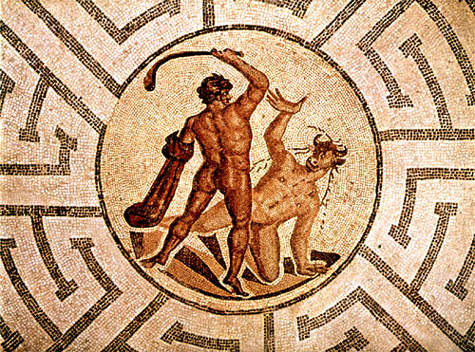
theseus_minotaur_mosaic

There was a pause in the conversation­—one of those sudden strange lulls that seem to have meaning, but are actually just coincidences.  Mr. Herbert didn’t like coincidences of any kind, so he said the first thing that popped into his mind.

“Why don’t we bury politicians alive?”

The married couple, Mrs. and Mr. Quain, looked at each other knowingly, and it didn’t take much perception to surmise what they were thinking.  See, George, I told you he was weird.  Yes, Gladys, I see what you mean.  Have some more of the kale salad.  Why, I don’t mind if I do.

The fourth person at the table, Mr. Muraña, didn’t react at all to Mr. Herbert’s absurd declaration.  He kept sawing at his overdone steak with a huge serrated steak knife.  The sawing was surprisingly delicate, as if Mr. Muraña was preparing tissue samples to be placed between glass slides.

“I said, why don’t we bury politicians alive?”

“We heard you the first time,” said Mr. Quain.

“Oh, George, be nice.”

Mr. Herbert feigned a smile.  “I am serious.  Here’s my proposal.”  He gulped the rest of his wine—a cloyingly sweet port which suited him just fine.  “OK, so we have elections, right?  There are always plenty of candidates.  The problem is, none of the candidates are ever any good.  Idiots, the lot of them.  So here’s what we do: on election day, at around 8pm, say, we bury all the candidates alive.  Just trundle them all up in a bunch of coffins and stick ‘em six feet under.  And then, get this, when the election returns come in, we dig up the winner only.  Good riddance to the rest, I say.”  He popped a cherry tomato into his fleshy mouth.

Mrs. Quain was pretending she didn’t hear any of Mr. Herbert’s idea, chewing her kale with grim determination.  Mr. Quain was less subtle.

“I thought we were having a serious conversation,” he huffed.

“I am serious.”

Mr. Muraña raised a hand and snapped a finger.  This being a restaurant with two Michelin stars, a waiter or waitress (it was impossible to tell which) immediately refilled his glass of water.  He then resumed his steak sawing.

“Well,” said Mr. Quain, “we were discussing Heidegger’s Being and Time.  At least, I thought we were.  Then you bring up this nonsense—”

“Is this a sort of game to you, George?” Mr. Herbert asked.

“Whatever do you mean?”

“I mean, I change the subject, and you get all indignant?”

Mrs. Quain smiled faintly, as if she had thought of something naughty.  Her husband said: “I’m not indignant!”

“I don’t want to talk about Heidegger any more.  So I changed the subject.”

“To something ludicrous!”

Mr. Herbert lifted a blue-and-white napkin and wiped non-existent crumbs from his lips.  “Not as ridiculous as your analysis of Being and Time.”

Mr. Quain was nonplussed.  He appealed to Mr. Muraña, as if Mr. Muraña were a referee who could adjudicate a thorny issue.  “What say you, Reyes?”

Mr. Muraña looked up.  “About Being and Time, or about burying people alive?  As to the first, I think the book is overrated, as is Heidegger, truth be told.  I think that the informational content of the book is close to zero.  It reminds of new age nonsense, such as Deepak Chopra.  You see in the book whatever you want to see.  It is a kind of Rorschach test.  The language is convoluted, almost labyrinthine.  Page after page on the difference between Being, and Being-in.”  Mr. Muraña put his serrated knife down carefully, perpendicular to and on top of his fork, making a cruciform as if to ward off evil spirits.  “As to the second, well, I don’t think you have thought your plan completely through, Mr. Herbert.  When did you say you would bury the politicians?  8pm, no?”

“That’s right.”

Mrs. and Mr. Quain looked at each other again.  She was softly shaking her head; he was turning vermillion.

“Well,” continued Mr. Muraña, “assume that the election returns come in around 11.  All the politicians would be dead.  You cannot survive three hours buried alive.  You would suffocate.”

Mr. Herbert looked as though he were about to retort.

“Now look here,” Mr. Quain said, “let’s get back to Heidegger—”

Mrs. Quain rolled her eyes and muttered, “You did spend so much time slogging through it…”

“The thing I like about Heidegger is that he distinguished between factual properties, on the one hand, and ‘Being’ on the other, which is not a property,” Mr. Quain said somewhat pompously.

“Do you even know what that means?” Mr. Herbert asked.

“Of course.  Let me explain.  See Reyes over there?”  Mr. Muraña raised his water glass in salute.  “He is a man.  That’s one of his properties.  But his existence is not in and of itself a property.  The term ‘man’ is a category.  The term ‘being’ is an existential.  It is factual to say he is a man.  It is ‘factical’ to say that he is ‘being’ right now.  Do you get it?”

“George,” Mrs. Quain said, “I don’t even think Heidegger would have gotten that.”

Mr. Herbert shrugged.  “I didn’t want to get into all that ontological inquiry versus ontic inquiry over dinner.  I wanted to talk about something a bit more fun.  Now, Mr. Muraña, as to the suffocation problem—”

“I am a woman, you know,” Ms. Muraña said.  She swatted away a non-existent fly.

“—the way I see it is, we could put these ventilation tubes down into the coffins.  Let them breath just fine.  We can plug them up later when the results come in on CNN.”

“You’re a woman?” Mr. Quain said, the same way one might enunciate the phrase The volcano is exploding?

“Oh of course she is,” Mrs. Quain said.  “You really don’t have a finely tuned gaydar, do you, George?”

A waiter or waitress arrived with dessert: a Meyer lemon donut with cereal milk.  Everyone took a plate; Ms. Muraña also asked for strong coffee.

“We should go further,” Ms. Muraña said.  “Why not?  I propose that we bury the accused.  Just during jury deliberations, you know.  Bury these people alive, with ventilation, as you say.  Let the juries or judge deliberate.  Then if they are acquitted, we dig them up.  Otherwise—”  She smiled.

“Only for heinous crimes, surely” Mrs. Quain said, sipping her cereal milk.

“Not you too!” Mr. Quain gasped.

“Of course,” Ms. Muraña said.  “Rape, murder, maybe tax evasion.”

“I like it!” Mr. Herbert said, biting into his donut.

Mr. Quain decided that the only way to get the conversation back on track was to plow ahead, and pretend that his wife, his neighbor, and his (apparently) female boss had all gone temporarily bananas.  “Anyway, I am struck by Heidegger’s final thesis: that time is temporal.  Now, you see that if—”

Mrs. Quain suddenly became a minotaur.

First, her head snapped up, as if her mind were now controlled by a powerful sorcerer, within range but out of sight.  Her eyes rolled back, showing blood-shot whites but no pupils.  Veins in her neck started to bulge.  Her chest expanded; her blouse and bra popped off in shreds.  She stood up violently, knocking her chair backward.  Several drinks were spilled.  She then shook her head rapidly, almost comically, as if to say no no no no no no no.

Her limbs grew in length and girth.  Her skin tone darkened, and wiry black hair grew all over.  Her skirt fell away; her panties became tatters; a huge uncircumcised penis (fully erect) now protruded from between her legs.

Her head transformed last.  Mrs. Quain’s eyes began to bleed, as if her tears were made of blood; her lips cracked and bled as well.  Her formerly perfect teeth became dull and yellow and fetid.  Her nose doubled in size, then flattened and became decided bovine.  Her forehead puddled forward, as if viscous, then hardened into an elongated shape: definitely the head of a bull.  Her eyes shrunk in size and receded into a furry face.  Steam escaped her lips.

Now fully naked and close to seven feet tall, the minotaur that was Mrs. Quain bellowed: an almost primal roar that caused everyone in the restaurant to startle.  As if by magic, a huge battleaxe appeared in her hairy arms.

“Είμαι Μινώταυρος!”

Mr. Quain was cowering on the floor at his wife’s feet.  Mr. Herbert was standing some twenty feet away, trying to decide whether to exit the room entirely.  Ms. Muraña had picked up her steak knife and was holding it without enthusiasm, as if she realized its efficacy was nil.

“Αυτό είναι ένα σύμπαν στο οποίο συμβαίνει αυτό!”  Mrs. Quain swung her axe at the table, cleaving it in twain.

There was a stampede towards the door.  Mr. Herbert was one of the first to leave, no doubt thinking of burying minotaurs alive.  Mr. Quain was a babbling, incoherent mess.  Port wine and tears and cereal milk mixed as they dripped down his face.  He had shit himself.

Only Ms. Muraña retained any kind of composure, although ‘composure’ here is a relative term.  She had wet herself, and had bitten her lower lip until it bled, but by sheer force of will she had stood her ground and not backed away.  Paradoxically, the fierce look on her face and her aggressive stance made her appear more feminine.

Why did she stand her ground, that day, when confronted with the minotaur?  That is, of course, the question.  It is not for us to speculate, or judge.

“Είναι ένας τρόπος που οδηγεί από το αρχέγονο χρόνο για να την έννοια του να είναι εκεί! Μήπως το ίδιο το ίδιο χρονικό διάστημα, όπως αποκαλύπτουν τον ορίζοντα της ύπαρξης!”  Mrs. Quain sprang forward and swung the axe at Ms. Muraña.

In abject terror, Ms. Muraña flung her knife to the side.  It skittered across the marble floor.

Ms. Muraña was decapitated cleanly, her head sloughing off like mashed potatoes piled too high.  Through some autonomic response, she raised her hands and clutched at where her head used to be, as if feeling for her soul.

The corpse that used to be Ms. Muraña slumped to the ground.

This is something that happened.

In some universe, this occurred.

***************************************************

If you enjoyed this story, you may also enjoy my book Why Is There Anything? which is available for the Kindle on Amazon.com.

sargasso

I am also currently collaborating on a multi-volume novel of speculative hard science fiction and futuristic deep-space horror called Sargasso Nova.  Publication of the first installment will be January 2015; further details will be released on FacebookTwitter, or via email: SargassoNova (at) gmail.com.

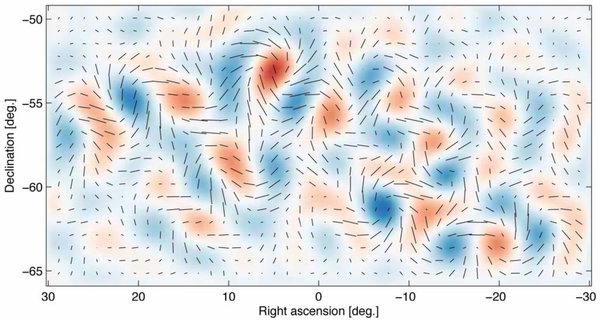
The big news of late is the discovery of gravitational waves from the very earliest time after the Big Bang.  What hasn’t been widely reported is that this represents a huge bit of indirect evidence that multiple universes really do exist.

Here’s more:

Big Bang Discovery Opens Doors to the “Multiverse”.

la-sci-sn-gravitational-waves-inflation-big-ba-001

(Harvard University / EPA)