Feeds:
Posts
Comments

Archive for the ‘Uncategorized’ Category

With the World Cup in full swing, I thought I’d try to tackle that age-old question: why do so many Americans hate soccer?  Maybe if I can get to the bottom of that question, I can help some Americans find joy in the “beautiful game”…at least until World Cup 2014 is over.

First, a little context.  I am an American who loves sports of all kinds but, I will admit, I hated soccer when I was younger.  The reasons for this are many.  I like to think that I’m typical in my soccer-aversion—typical of many other Americans—and this is what gives me some credibility in writing this blog post.  But what’s interesting is that I eventually came to enjoy soccer, and it is partly the journey from hatred to enjoyment that I wish to share with you.

Why did I not like soccer?  I can think of at least 4 reasons:

1)      Turnovers.  To an American immersed in the culture of American football (henceforth just called football) and basketball, it seems as though (in soccer) teams commit turnovers every five seconds or so.  A little bit of background: a turnover (in any sport but soccer, really) occurs when one team gives up control of the ball.  Normally, in most sports, a turnover is a major thing; statisticians keep track of turnovers, and the team that “turns the ball over” more loses most of the time.  In basketball, a turnover often leads to a “fast break” (an exciting play usually leading to a score).  In football, turnovers are catastrophic; fumbles and interceptions are often the most exciting plays in a game.  They represent huge reversals of fortune.  A football team which commits six turnovers in a game will almost always lose.

So imagine an American kid like me, watching soccer on TV for the first time (something that didn’t happen until I was almost in college, by the way).  I see Spain playing Belgium in the World Cup.  Spain has the ball…but within five seconds Belgium has the ball…but then within five seconds Spain has the ball…ad infinitum.  An American football announcer could not possibly keep up: “Spain turns it over!  Belgium kicks it…and turns it over!  Now Spain has it but…oh no, they’ve turned it over!  Belgium has a chance here…nice pass to Ceulemans…but he turns it over!”  If you grew up watching football and basketball, this turnoverfest is maddening.  It appears random, like pinball.

What I failed to realize, back in 1986, is that soccer is a game of averages, of field position, of drift velocity.  It doesn’t really matter in soccer if the ball is “turned over” often.  As long as (on average) the ball tends towards one end of the field or the other, one team will have an advantage.

drift-velocity

Soccer is a game of drift velocity.

It’s like an electron in a copper wire, under the influence of an electric field: the motion of the electron is mostly random, but over time it tends to move in the opposite direction as E.  If Brazil has a better team than Cameroon, then—despite the large number of apparent “turnovers”—the ball will tend to drift towards the Cameroonian goal.  This drift velocity was apparent in the final stats from Monday: Brazil had the ball 54% of the time, and had 19 shots on goal (compared to 12).

I’ve learned to enjoy soccer, in part, by turning off my instinctual aversion to turnovers.  When I watch soccer now, I am watching the semi-random kicking of an electron, which will tend (over time) to drift in one direction or the other, due to the superior ability of one of the teams.  It’s a game of statistical mechanics; it’s irrelevant whether you keep the ball continuously for any particular length of time.


2)      Low scoring.  To an American used to basketball scores like 95-92, or football scores like 35-28, soccer seems boring, in part because scoring is so rare.  But the “low scoring” of a soccer game should be taken in context.

For one thing, football isn’t as high scoring as you might think.  The average number of points scored by American football teams in 2013 was 23.4.  Consider that a touchdown (analogous to a goal in soccer) is worth a de facto 7 points (since the extra point is almost always successful).  To compare football scoring to soccer scoring in any meaningful way, football scores should be normalized by dividing by 7.  A score of 35-28 is analogous to a soccer score of 5-4.  High scoring, sure, but not overly so.  And a defensive battle like the Panthers/49’ers game last November, which ended with a Carolina victory of 10-9, is much like a soccer score of 1-1.

As for basketball, well, goals come so often that (individually) they lose almost all meaning.  I like basketball, but a soccer goal is much more exciting for being so rare.  Of course, it’s possible to make scoring too rare: I imagine that a game of Ullamaliztli was pretty boring indeed.  You can only use your hips, and have to get a 9 pound ball into a tiny goal?

Tlachtli

The losers are executed.

Which brings us to a tangential point.  Basketball is a very pixillated sport, since the “quantum of scoring” (one point) is so meaningless.  In soccer, the quantum of scoring (one goal) is a much, much bigger deal.  This makes soccer goals more entertaining, on a 1-1 basis, than  basketball goals; but it also means that you’re measuring the worth of individual teams with a very blunt instrument.  A football victory, 10-9, becomes a draw in soccer (when normalized) because the goals are not finely-tuned enough to “detect” a difference in such evenly matched teams.  Whether this is a good thing or not is up to debate.


3)      Red cards.  To an American, penalties are a common and necessary part of having a physical game.  But in soccer, the penalties seem very out of proportion to the offenses committed.

Consider a tackle in soccer.  It’s OK to tackle the opponent if I get my foot on the ball.  But if I miss the ball, I’m going to get penalized.  And if the referee thinks that I was trying to trip the opponent on purpose (a very subjective thing), I’ll get a yellow card waved in my face.  Two yellow cards equals a red card, and I’m out…and my team is now down one player.

Seriously?  Down one player for the entire game?

The same thing happens in ice hockey.  It’s called a power play.  And when the other team scores, the penalized team gets the player back.  The power play ends, and everything is fair again.  Why can’t it be like that in soccer?

I’ve always felt that your entire team losing a player for the rest of the game should be the nuclear option of penalties, such as if one of your players bites another on the shoulder.  It shouldn’t be used against a player that commits two ticky-tack penalties.  This is especially true in an era when diving (called flopping in the USA) has become a cottage industry.  Why not dive, when you have a good chance of ejecting a player from the game entirely?

o-LUIS-SUAREZ-570

In football, you have to do something egregious to get tossed out of a game, like throwing a punch.  Even then, your team is not down a player; a substitution is allowed.  In NBA basketball, you can commit up to 5 personal fouls; you’re tossed out on the 6th (this is called “fouling out”).  Again, when you foul out, your team isn’t penalized unduly…they put in someone else to take your place.

How does an American learn to accept the harshness of the red card system?

With difficulty, I admit.  I still don’t like it.  But I sort of understand it.  After all, how else can you penalize a team in a game in which there’s no stopping of the clock?  If players were allowed five, or four, or even three yellow cards before being tossed out, I daresay there would be more tripping, more pushing, more dangerous plays…and more injuries.  Then again, there would be less diving…


4)      Offside.  This might be the hardest aspect of soccer to fathom, to a person raised on Michael Jordan fast breaks and Dan Flutie Hail Mary passes.  Why do you penalize a team for having a player in scoring position?  Get rid of the offside penalty (the idea goes) and scoring would go up, and the number of exciting plays would increase.

Oh, who am I kidding.  I still hate the offside rule.

“But wait!” the soccer aficionado says.  “You get rid of offside penalties, and people will just park in the goal, waiting for a ball.  What’s the excitement of that?”

Um, that happens already.  It’s called a corner kick.  And corner kicks are exciting.

Sure it would change the game.  There would be no more beautiful offside traps.  Instead, there would be fast breaks.  Which is more likely to end up on a highlight reel: a well-executed offside trap, or a well-executed fast break?  I’ll let you decide.

Which brings me to soccer’s flaws (yes, it has flaws, just like every game and sport does.)  Not only should the offside rule be tossed out (or at least relaxed), but shootouts to decide a game are ridiculous.  Why?  Consider that a shootout contest has little relation to the actual game of soccer.  It is, if you will, a different (but related) sport entirely.  Settling a game with a shootout is like settling a basketball game with a free-throw shooting contest.  Why anyone thinks that shootouts are a good idea is anyone’s guess.  Sure, they can be exciting…but settling a soccer game with a spin of the roulette wheel would be “exciting” too—that doesn’t mean we should actually do it.  Just have extra periods until someone scores a golden goal.  And if you’re concerned with players getting too tired, well…there are a lot of players sitting over on that bench.  Don’t you think some of them would like a chance to play?

Ultimately, I like soccer, despite its flaws.  I’ve gotten used to the offside rule; I recognize it as a rule that purposely rewards passing and open-field play, at the expense of shots-on-goal.  It’s a choice, to make soccer a particular kind of game, no better or no worse than the (different) game you’d get without the rule.  Similarly, I’ve learned to embrace the shootout: they are rare, after all, and only occur after an extra period has failed to designate a winner.  In such a case, the teams are so evenly matched that we might as well use a flip of the coin.  And we’ll call that coin flip a shootout.

Note: I’ve made no mention of baseball in this discussion.  The reason?  Come on.  Baseball is just boring.

*********************************************************************************************

If you enjoyed this post, you may also enjoy my book Why Is There Anything? which is available for the Kindle on Amazon.com.

sargasso

I am also currently collaborating on a multi-volume novel of speculative hard science fiction and futuristic deep-space horror called Sargasso Nova.  Publication of the first installment will be January 2015; further details will be released on FacebookTwitter, or via email: SargassoNova (at) gmail.com.

Read Full Post »

What is art? Why do I enjoy Bartok’s Concerto for Orchestra, yet my 12-year old son thinks it is wretched? Why are the first three Song of Ice and Fire books great, but the last two are mediocre at best?

I’m sure that there’s a long history of the philosophy of art, and I’d love to quote it here to give you some insight. Unfortunately, this is a subject that I know nothing about. Nothing. Literally. I haven’t even googled “philosophy of art” to see what comes up.

That’s because I already have my own theory. I share it now because I have enough hubris to think that it may speak to you, too.

In a nutshell: with art we want to see patterns, but also be surprised and have our expectations subverted.

Now, art has more purpose then what I’ve just described. Art can educate, or enlighten, or convey some specific emotion (Pain? Love?) But I’m concerned with what I see as the primary function of art: to entertain. I don’t listen to Mozart to learn anything; I don’t read Brandon Sanderson to gain insight into my own soul. And I certainly won’t pay $15 to go to an art museum for any purpose other than to entertain myself for an afternoon.

But what about non-fiction books, you say? Didn’t you read a three-volume biography of Winston Churchill last year?

Yes, I did. I read that biography as a form of entertainment. I find learning entertaining. I found the story fascinating. I wasn’t trying to educate myself, except tangentially; I have no pressing reason to know anything about the former prime minister.

But as for art, as entertainment: I think humans are biologically predisposed to enjoy patterns, but I also think we enjoy being surprised. It is in the confluence of these two (sometimes competing) factors that art resides.

Patterns

There is a kind of sweet-spot here: if patterns are too obvious they’re boring; if patterns are too complicated (or even non-existent) then that’s boring too. For every person there is an ideal pattern complexity for a given artistic medium, and it’s fascinating that these ideals seldom overlap.

Take patterns in novels. Novels exist on a spectrum of complexity:

Dr. Seuss Nancy Drew A Wrinkle in Time The Da Vinci Code Harry Potter The Foundation Series Dune The Brothers Karamazov Gravity’s Rainbow Ulysses


You may disagree with the exact ordering but that’s not the point (it’s subjective anyway). To me, the ideal novel is somewhere around level 7 (Dune). I will almost always read something in the 6-8 range. I didn’t enjoy the Harry Potter series because it was too simple; likewise I found James Joyce’s Ulysses incomprehensible.

But other people disagree. An awful lot of people find the complexity level of the Da Vinci Code to be just right. And that’s great: I don’t mean to imply that my preference for more complexity is somehow better. And if you can “read” Ulysses for more than five minutes without laughing, then more power to you.

toast

I don’t see it.

We are hard-wired by evolution to see patterns in everything, even if the patterns are spurious. We see faces on Mars. We see Jesus in cheese toast. People see meaning (even if it’s unintended) in Finnegan’s Wake. The thing is, our abilities are not the same. Where I see pattern, you see noise; where I see banality, you see complexity. That’s why our tastes differ. And our ability to see patterns depends on two things: raw processing ability, and content knowledge.

There’s a great scene in the movie Defending Your Life where an “unenlightened” soul tries food that a more “enlightened” person is eating. (The “enlightened” people use a lot more of their brain, you see.)

Albert Brooks: What are you eating?

Rip Torn: You wouldn’t like this.

Brooks: What is it? What does it taste like?

Torn: You’re curious, aren’t you? Good, I like that about you. Want to try?

Brooks: Yeah. Looks so weird. Oh, my God!

Torn: A little like horseshit, huh? As you get smarter, you begin to manipulate your senses. This tastes much different to me than it does to you.

Brooks: This is what smart people eat?

Now, I don’t think it’s controversial to declare that pattern-recognition ability differs from one entity to another. For example, I doubt that a ladybug can detect the difference between white noise and Metallica (sometimes I can’t, either). In my experience dogs don’t seem to respond much to music (others do think they might have a musical sense). I will go out on a limb and say that I can enjoy Dune whereas an eleven-year-old will not, because I have more ability to hold the patterns of such a book in my mind.

But wait. I don’t want this to be an elitist manifesto; I’m not better than the Joneses. So I will add that content knowledge and context are more important than raw processor speed. Dune is an adult book, with topics and themes that resonate with people who have more experience in the world. I was a smart eleven-year-old, and I read Dune back in 1980, but I didn’t get much out of it because a lot of it didn’t make much sense to me. It wasn’t a matter of complexity, but of experience.

Consider music. If you study music theory, you’ll be able to hear patterns and structures that others cannot; you may enjoy certain music when others do not. It has less to do with processing ability and more to do with content knowledge.

For example, I find much of modern music boring. Why? Because the chord progressions are banal (I-IV-V-I) and the rhythms unvarying (drum machine, anyone?) But obviously, a lot of people like such music, and in part it’s because of the simplicity. The chord progression I-IV-V-I is common enough that even the untrained ear can pick it out; it is a pattern that people recognize.

This also explains why certain music “grows on you”. The first time I listened to Bela Bartok’s Concerto for Orchestra, in a laundry mat in Torrejón, Spain, I found the music off-putting and bizarre. But I listened to it again and again, probably because I was stubborn enough to think that eventually I would understand it. And I did. I find it today the single greatest piece of music ever written, in part because it is so familiar to me now that I hear its patterns and complexities almost instinctually. I daresay I have the whole thing memorized, and when I listen to it, it is almost as if I am recalling it in real time. The experience is sublime.

To you, it may taste like horseshit.

At the premiere of Beethoven’s String Quartet No. 13 (Op. 130), the audience did not demand an encore of the final movement (the so-called Große Fuge). “Beethoven, enraged, was reported to have growled, ‘And why didn’t they encore the Fugue? That alone should have been repeated! Cattle! Asses!’”  The fugue itself was dismissed at the time as being repellent and incomprehensible. Did Beethoven have the ability to imagine complexities that were too complex for the average listener?

[Note: listen to this five times over five days. I guarantee that your experience the fifth time will be vastly different then the first.]

I have focused unduly on music, but the same ideas apply to other arts as well. For example, the appeal of paintings by Jackson Pollock may have something to do with fractal dimension (a measure of complexity).  Pollock knew nothing about fractals, but he instinctively splattered paint in a way that is “pleasing” in some mathematical sense. His paintings had quantifiable complexity, and that complexity fell in the range that humans find appealing. His paintings only appear random at first glance.

pollock

Untitled, ca. 1948–49 ( Jackson Pollock) © 2011 The Pollock–Krasner Foundation / Artists Rights Society (ARS), New York

There is obviously room for experiment here. Is there a quantifiable difference in complexity between Bartok and Lady Gaga, or between Ulysses and Harry Potter? Do a person’s tastes in music (or art, or literature) settle onto a single uniform “complexity level”? For example, if I enjoy Bartok, then would I tend to prefer a jazz piece that has a similar level of complexity? Am I just whistling Dixie, here?

Subverting Expectations

But art also, ideally, involves something else. It involves

SURPRISE

which is to say, breaking the rules, breaking the obvious patterns

into patterns of a different kind.

I don’t just want to see patterns in my literature or artwork or music, but I want to see novel patterns, a herd of horses of a different color. I want to be surprised. And the best kind of surprise is when you realize that there was a pattern there all along, but you just didn’t notice it. It’s humbling, and marvelous. It’s like—

—when George Taylor falls to his knees in front of the half-submerged Statue of Liberty, cursing humanity—

—when you discover exactly who murdered Roger Ackroyd—

—when in the glorious 9th three instrumental themes are recounted and discarded, and then the human voice breaks free, because instruments alone cannot do justice to the final ode—

—when you notice the tiny legs of Icarus in the water, and the indifference of the wide world—

—when the chorus of demons judges the singer, and finds him wanting, with a devil put aside for him—

Bohemian-Rhapsody-620x400

Bohemian Rhapsody is a comic-horror-opera grafted onto a Styx-style power love ballad, and that makes all the difference.

These are patterns turned upside-down, subverted in the best possible way. It is the subversion of the plot twist, the delight of the unexpected, the imp of the perverse, that turn art from mere pattern-production into something more profound.

But how do you truly surprise someone in art? Context makes all the difference.

When the movie Psycho first appeared in 1960, audiences were shocked. After all, Janet Leigh was billed as the star…and she dies 30 minutes into the film! Can you do that? Is that allowed?

The movie doesn’t really impact viewers today (I’ve never met someone born after 1980 who liked the film). I think that’s because people have been jaded by movies like Friday the 13th and Halloween…once you let a certain amount of gore out of the box, you can’t put it back in. To scare audiences today, you need to keep upping the ante…and of course you also have to know who Janet Leigh is.

Context makes all the difference.

People were said to have rioted at the premiere of Stravinsky’s “Right of Spring”. This would be unfathomable today…

Context makes all the difference.

When The Sixth Sense first came out, people loved the movie because of its twist ending. Ironically, the twist that made the director M. Night Shyamalan famous also guaranteed that he’d never have a good movie again. Why? Because we are all looking for a twist now. This meta-knowledge ruins the experience; it can’t really be a twist unless you’re not expecting it to happen. I thought The Village was awful because, knowing who the director was, I was looking to figure out what “the twist” was from the very first moments…

Context makes all the difference.

Here’s how you make good art: you layer your work with different patterns, of differing complexities. This is called “having something for everyone!” A complex story can have simple themes; a complex symphony can have the I-IV-V-I chord progression. Then, on top of the patterns and complexities, you need to have something new, something unexpected. Basically, you need to throw the Red Wedding in there somewhere. Which brings me to the question: Why are the first three Song of Ice and Fire books great, but the last two are mediocre at best?

i.0.game-of-thrones-red-wedding-real-life

Answer: no Red Wedding. Here’s a minor spoiler: in A Feast for Crows, nothing really happens. The entire book can be skipped without anyone losing any plot threads. (Seriously.) A Dance with Dragons is marginally better, and there are a few shockers towards the end, but the sense that the series has an overall pattern is diminishing. Major spoiler alert. Take Daenerys’ story arc. At the end of A Dance with Dragons she is basically in the exact same position as she was three books earlier: no followers, no kingdom, no armies, no clue. It’s as if nothing happened. The plot of the series has ground to a halt, and the reader doesn’t really have confidence (after the A Feast for Crows debacle) that the writer’s-block inflicted author can ever get back on track. We’ll see.

Hey, George: subvert our expectations. Write a book in less than five years!

In fact, I’ve changed my mind. Art is 99% perspiration. I need to get back to the book that I’m writing:

sargasso

Find out more on FacebookTwitter, or via email: SargassoNova (at) gmail.com.

Read Full Post »

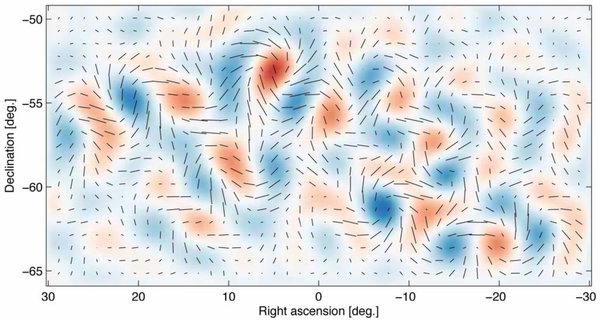
The big news of late is the discovery of gravitational waves from the very earliest time after the Big Bang.  What hasn’t been widely reported is that this represents a huge bit of indirect evidence that multiple universes really do exist.

Here’s more:

Big Bang Discovery Opens Doors to the “Multiverse”.

la-sci-sn-gravitational-waves-inflation-big-ba-001

(Harvard University / EPA)

Read Full Post »

Your tears move millions

“Somewhere in the multiverse, you are loved.  Somewhere you are hated.  Somewhere, you are loved by everyone.  Somewhere, you are hated by everyone.  God exists, and He does not; the same is true for Allah, and Buddha, and Zeus, Odin, Cthulhu, and the Green Lantern.  Somewhere, you are Wonder Woman’s arch villain.  Somewhere else, there are no villains, because perfect goodness has found its expression as a mathematical absolute.  You cry, and you do not cry; your tears move millions or are forgotten forever.

“And somewhere else, namely here, you are exactly who and what you are.  You are loved by those that love you, and you may or may not love them in return.  You believe in God, or do not believe; you think that there are other universes, or think that this universe is all that ever was and ever will be.  This is the universe you are stuck with.  Love it.  Hate it.  It’s all you’ll ever know.

“And what about goodness?  What about justice?  Can you live with the idea that in some places, at some times, pure evil has dominion, and good has been forever banished?  Are those universes plausible?  Or are they phantoms, highly improbable, like the vanishing cracks of a broken teapot?

“Think on this: the ultimate question, “why is there anything?” is perhaps unanswerable, mostly because it requires us to speculate about the unknowable.  The fly knows nothing about what’s outside the bottle; Scarlett O’Hara knows nothing about Margaret Mitchell; Plato, in his easy chair, knows nothing about the world as we know it today; the falcon cannot hear the falconer; and you know nothing about life in the fractal part of the æther.  And so too, if God exists, we know nothing of him/her/it/them.  We know what is before us, what can be observed, measured, quantified, understood.  We can speculate all we like; we can even draw inferences from some of our observations, but in the end we can never be sure.

“All we can do is be 51% sure.

“And have faith that in 51% of the universes, goodness prevails.”

From my book Why Is There Anything? which is available for download on the Kindle.

Read Full Post »

Consider this map of Middle Earth:

middle earth

There’s a scale there, on the left, and the source is none other than J. R. R. Tolkien himself, so we can trust the source.  You can verify for yourself, but I reckon Bilbo’s journey to Esgaroth (and then the Lonely Mountain) to be something like 880 miles, and an equal amount on the way back.  This leads to my first discovery…

Bilbo’s journey was like walking from St. Louis to Washington, D.C., and back again.

By car, it should have taken 12 hours and 40 minutes to get to Smaug’s hoard, and an equal amount of time to return (assuming Bilbo had access to No Doz).  Basically, Bilbo had a long Thanksgiving drive.

What about Frodo’s longer journey to pitch the One Ring into some lava?  As the eagle flies, the Shire to Mt. Doom is about 1100 miles, which leads to…

Frodo’s journey (as the eagle flies) was like walking from Baltimore to Miami.

Of course Frodo’s actual journey was a tad more circuitous.  Breaking the journey into legs (Shire to Rivendell, Rivendell to Moria, etc.) I get that it was more like 1450 miles, or…

Frodo’s actual journey was like walking from Little Rock, AR to Boston.

By car, assuming that Frodo drives at a reasonable pace and makes only a few stops, it would take 21.5 hours  for Frodo to get to Mordor and chuck the ring-thingy into that volcano.  (Of course Sam might take a shift driving, and Gollum might be willing to run into the occasional 7-11 to buy snacks.)  Frodo’s deus ex machina trip out of Mordor by eagle is a little like getting an unexpected trip back home via helicopter.

There are other games you can play with the map, to give yourself a sense of scale.  The Shire is about 21,000 square miles, leading to…

The Shire is about the size of West Virginia.

Insert your own joke here.

hillbilly

Bubba Baggins

Then you find that Mordor (which is suspiciously square in shape!) is about 118,000 square miles, or…

Mordor is about the same size and shape as New Mexico.

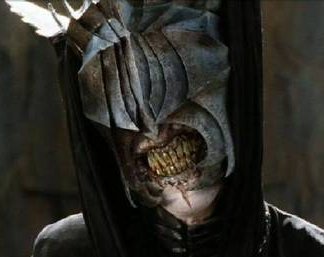
This cannot be mere coincidence.  Aren’t their climates similar?  Isn’t the Trinity nuclear test site analogous to Mt. Doom?  Doesn’t New Mexico have George R. R. Martin, who looks very similar to the Mouth of Sauron?

Mouth_of_Sauron

Please don’t ask us about the Winds of Winter!

I’ll end my speculations on this note.  “Middle Earth” is an anagram for “Milder Death”, which explains why…well…it explains nothing.  Never mind.

Read Full Post »

This is too perfect not share.

Ben Orlin's avatarMath with Bad Drawings

Our World: Market Rebounds after Assurances from Fed Chair
Mathematically Literate World: Market Rebounds without Clear Causal Explanation

Our WorldFirm’s Meteoric Rise Explained by Daring Strategy, Bold Leadership
Mathematically Literate WorldFirm’s Meteoric Rise Explained by Good Luck, Selection Bias

Our WorldGas Prices Hit Record High (Unadjusted for Inflation)
Mathematically Literate WorldGas Prices Hit Record High (In a Vacuous, Meaningless Sense)

Our WorldPsychologists Tout Surprising New Findings
Mathematically Literate WorldPsychologists Promise to Replicate Surprising New Findings Before Touting Them

Our WorldAfter Switch in Standardized Tests, Scores Drop
Mathematically Literate WorldAfter Switch in Standardized Tests, Scores No Longer Directly Comparable

View original post 470 more words

Read Full Post »

Up until Oct. 7, 2013, my modest blog averaged about 18 hits per day.  Then this happened:

VIRAL

A post of mine, the 9 kinds of physics seminar, had gone viral.  I was shocked, to the say the least.

I spent some time investigating what happened.  The original post went out on a Thursday, Oct. 3.  Nothing much happened, other than a few likes from the usual suspects (thank you, John Zande!)  I did share the post with Facebook friends, which include not a few physicists.  (Note: I don’t normally share my blog posts to Facebook.)  Then on Monday, Oct. 7, the roof caved in.

It started in India.  Monday morning, I had over 800 hits from India.  My initial thought was that I was bugged somehow.  But soon, hits started pouring in from around the world, especially the USA.

And then it kept going.

On Tuesday, Oct. 8, the Physics Today Facebook page shared the post, where (as of today) 451 more people have shared it, and 188,000 people have liked it.  (Interesting question: my blog has only had 130,000 views.  Are there really that many people who like Facebook posts without even clicking on the link?)

The viral spike peaked on Wed., Oct. 9.  I had discovered by then that my post had been re-blogged and re-tweeted numerous times, by other physicists around the world.  If you Google “The 9 kinds of physics seminar” you can see some of the tweets for yourself.

Why did the post go viral?  Who knows.  I’m not a sociologist.  I think it was a good post, but that’s not the whole story.  More importantly, the post was funny, and it resonated with a certain segment of the population.  If I knew how to make another post go viral, I’d do so, and soon be a millionaire.

What’s fascinating to me, though, as a math nerd, is to examine how the virality played out mathematically.  Here’s how it looked for October:

Chart 1

I don’t know anything, really, about viral cyberspace, but this graph totally matches my intuition.  Note that for the last few days, the hits have been around 400/day, still much greater than the pre-viral era.

After the spike, is the decay exponential?  I’m not a statistician (maybe Nate Silver could help me out?) but I do know how to use Excel.  Hence:

Chart 2

The decay constant is 0.495, corresponding to a half-life of 1.4 days.  So after the peak, the number of hits/day was reduced by 1/2 every 1.4 days.

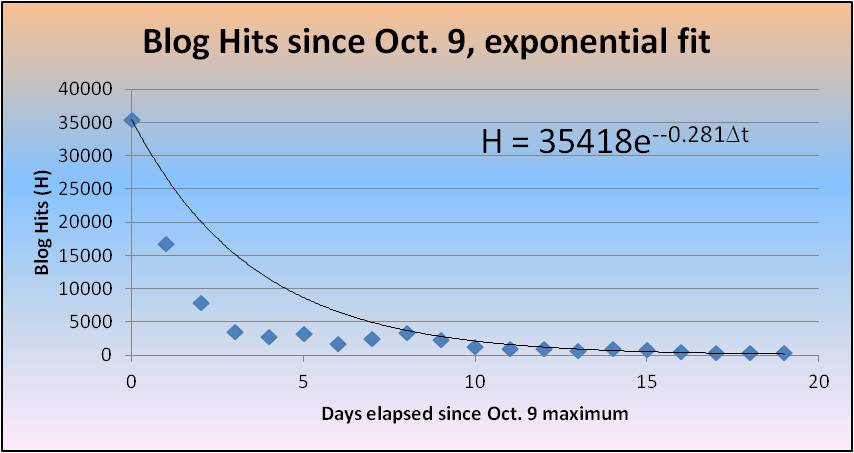
This trend didn’t continue, however.  Let’s extend the graph to include most of October:

Chart 3

Over this longer time span, the decay constant of 0.281 corresponds to a half-life of 2.5 days.  The half-life is increasing with time.  You can see this by noticing that the first week’s data points fall below the exponential fit line.  It’s as if you have a radioactive material with a half-life that increases; the radioactive decay rate goes down with time, but the rate at which the number of decays decreases is slowing down.  (Calculus teachers: cue discussion about first vs. second derivatives.)

Maybe this graph will help:

Chart 4

The long-term decay rate seems to be 0.1937, corresponding to a half-life of 3.6 days.  At this rate, you would expect the blog hits to approach pre-viral levels by mid-November.  I doubt that will happen, since the whole experience generated quite a few new blog followers; but in any case, the graph should level off quite soon.  What the new plateau level will be, I don’t know.

Where’s Nate Silver when you need him?

**********************************************************************************

If you enjoyed this post, you may also enjoy my book Why Is There Anything? which is available for the Kindle on Amazon.com.
sargasso

I am also currently collaborating on a multi-volume novel of speculative hard science fiction and futuristic deep-space horror called Sargasso Nova.  Publication of the first installment will be January 2015; further details will be released on Facebook, Twitter, or via email: SargassoNova (at) gmail.com.

Read Full Post »

Last week I had a post go viral.  My hits went into the stratosphere, and traffic to my blog went up by a factor of almost 1,000.  I know this is my 15 minutes, and they’re fading fast.  So, while I still have some elevated traffic, I thought I’d re-blog a few older posts, to see what happens.

Number form synesthesia or: why is there a kink at 20?

Whenever I think of numbers, I form a mental image in my head.  This is not a conscious process; it happens consistently and involuntarily.  For example, whenever I imagine the numbers 1 through 100, I see something like this:

Numbers

You will note several interesting features of this mental map.  Firstly, there is always a 90° left turn at the number 20; there is always a 90° right turn at the number 100.  These two kinks are the only kinks in my mental number line; the lines are perfectly straight before zero and after 100.  Why the kinks are there is mysterious.

Notice also that the image is not to scale.  That is, 50 occurs half-way between 20 and 100 (why isn’t 60 there instead?)

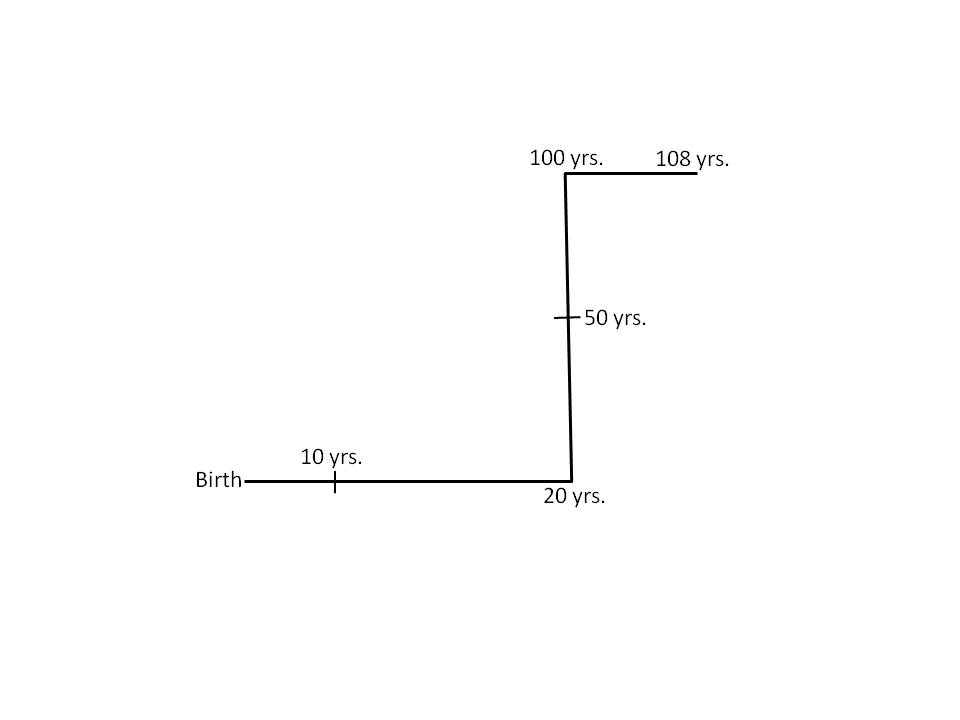
Here’s another mental map I have, one that appears whenever I imagine a person’s age:

Age

You will note that this mental image is similar to the previous one, but rotated 90° to the right.  The scale is also warped: not only in the location of 50 yrs., but in the location of 10 yrs.  I believe this stems from my childhood belief that the years from age 10 to age 20 would seem to last longer than the years from 0 to 10.

Why childhood?  Well, I’ve had such mental images for as long as I can remember; it follows that they were first “constructed” in my brain at an early age.  And there is a sort of logic to the idea that 10-20 lasts “longer” than 0-10.  After all, we don’t normally recall anything about our first 5 years or so; to a child, it’s almost as if you missed those years.  So if I am 10 years old, say, and looking back at my life so far, it won’t seem nearly as long as the decade looming in front of me.  (I must stress that I am not a neuroscientist and that this is all pure speculation.)  As for why 50 is half-way between 20 and 100, I can only conclude that I wasn’t so good at calculating averages when I was younger.  The similarity of the two mental maps is best explained by positing that one of the maps is derived from the other, although which came first I cannot say.

But still, that kink…

I only became aware very, very recently that there is a name for this phenomenon.  These maps I make are called “number forms” and they are a form of synesthesia.  I have a friend who experiences grapheme-color synesthesia, seeing letters and numbers as if they had very specific colors.  It never occurred to me that my mental number maps were a related phenomenon in any way.

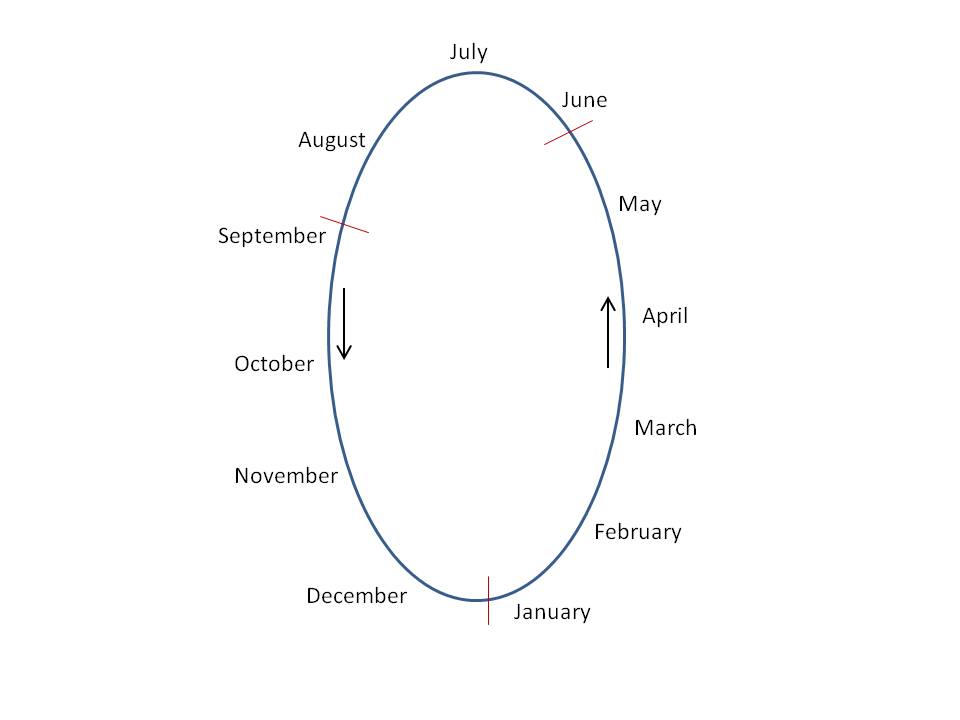
Here’s how I see the months of the year:

Calender

The order is always counterclockwise.  Strangely, the months are not quite evenly distributed: July is always at the top, but December/January are level at the bottom, with the (strange) consequence that there is one more month in the first “half” of the year than the second.  I also mentally divide the year into three partitions, starting at Sept. 1, Jan. 1, and June 1.  I am confident that this partitioning is a product of having attended school (on a semester system) for 25 years of my life.

Here’s the strangest map of all, but one that has (I think) the easiest explanation:

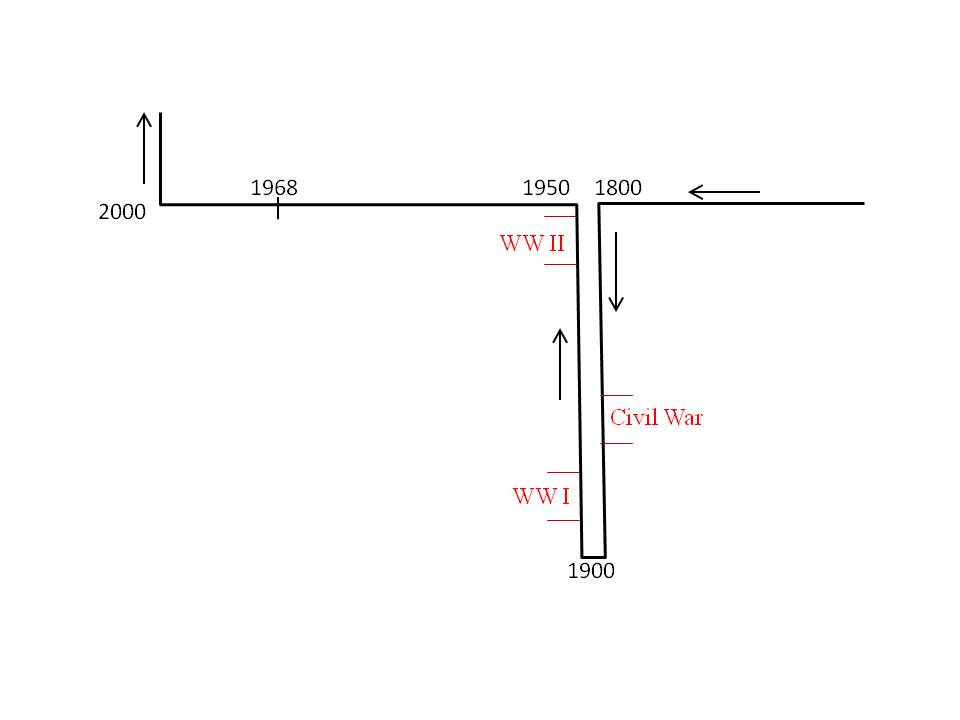
Years

This is how I picture the recent history of the world, from the late 1700’s to the present.  There are four kinks: at 1800, 1900, 1950, and 2000.  The three biggest wars (to an American, at least) are marked in red; 1968 is also clearly “labeled” in my mental map (obviously because it’s the year of my birth).  Again, there is a lack of scale: 1800-1900 takes up as much “space” as 1900-1950.  One might conclude that I regard the 20th century as more “important” than the 19th, since I relegate more space to the former.  But there is a simpler explanation.

I can still vividly recall a timeline of history that I saw, perhaps in the 3rd or 4th grade, that has the exact same topology as this last mental map of mine.  The years from 1800 to 1970 (or so) were graphically depicted in a timeline; there were folds at 1900 and 1950, simply to make the timeline fit on the printed page.  Above key years (such as 1939) were cartoonish drawings of world events, such as World War II or Man Lands on the Moon.  Beyond the 1970’s there was nothing.  I wish I could find this image, which I believe in some sense “triggered” this form of synesthesia; I want to say that the image was in a World Book Encyclopedia but I have no proof of this claim.

In any case, I think other forms of synesthesia may also be linked to the way we first learn certain things.  My friend (who sees colors for every letter of the alphabet) once told me the probable origin of his synesthesia.  He first learned letters and numbers through colored refrigerator magnets; the colors and letters became inextricably tied in his mind, and the connections exist to this day.  For any real neuroscientists out there, I believe this is a fruitful area for further research.

Anyway, I’d be curious to see how many other people experience “number forms”.  It doesn’t make you crazy.  After all, Sir Francis Galton called his book on the subject The Visions of Sane Persons.

But still, that kink…

Read Full Post »

Prescribed_burn_in_a_Pinus_nigra_stand_in_Portugal

Run for your lives!

A few days ago I heard a story on NPR about wildfires in Yosemite.  It turns out that something like 360 square miles of forest have burned.  Being a math geek, I immediately took the (approximate) square root of 360 in my head:

360 ≈ 19 x 19

I did this without really even thinking about it; I did it in order to be able to visualize the size of the Yosemite blaze.  I now had a picture in my head of a square, 19 miles by 19 miles.  A burning square.  That’s how big the conflagration was.  And the mental math was important because I have no intuition at all about square units.

[Disclaimer for my readers not in the USA: I use the S.I. units (m/kg/s) in my physics research, but in American culture units like miles, inches, gallons, etc. are still endemic.  Sorry about that.]

Quick: how many square feet is a baseball diamond?  If you’re like me, absolutely nothing comes to mind.

I do know that a baseball diamond is 90 ft. x 90 ft. square.  So that’s the answer: 8100 sq. ft.  (752.5 m2)  The problem is that, somehow, psychologically, 90 ft. x 90 ft. seems much smaller than 8100 sq. ft., even though they are the same.

The county I live in, Jackson County, NC, is 494 sq. mi. (1,279 km2).  Somehow, this seems big to me.  But in order to better visualize this area, take a square root: the county is like a 22 mile x 22 mile square (36 km x 36 km).  In those terms, the county seems puny (although it is still bigger than Andorra).  The area of Jackson county is less than 1% the total area of the state of North Carolina.

What about the Yosemite fire?  360/494 = 73%.  So that fire is about three-fourths the size of the puny county that I live in.  A big fire, sure, but not apocalyptic.

The problem that all of this illustrates is one of scaling.  Most of my students know that 1 m = 100 cm.  However, very few know (initially) that 1 m2 ≠ 100 cm2.  Instead, 1 m2 = 10,000 cm2.  That’s because a square meter is a 100 cm x 100 cm square.

This fact leads people’s intuitions wildly astray.  Suppose I double the length and width of an American football field.  The area goes up by a factor of 4.  What was approximately 1 acre has become 4 acres.  Suppose I switch from a 10-inch pizza, which feeds 2, to a 20-inch pizza.  That pizza feeds 8.

It gets even stranger if you imagine the switch from length to volume.  Michelangelo’s David is almost 17 ft. tall.  Assume David was 5’8’’ (68 inches).  Then the statue represents a scaling factor of x3 in terms of length (3 x 68 = 204 in. = 17 ft.)  Imagine a real-life David, 17 ft. tall.  How much would he weigh?  If the life-size David is 160 pounds, the 17 ft. David would be 160 x 33 = 160 x 27 = 4,320 pounds.  To most people, this seems very strange.

David

He weighs 4320 pounds. If he weren’t made of stone, that is.

But back to my original idea: I had mentioned that I had no intuition about square units.  I don’t think many people do.  What intuition I do have is based on experience, and comparing unknowns to knowns.  500 sq. miles is about the size of the county I live in.  An acre is about a football field.  1000 sq. ft. is about the area of a small house.  500 sq. in. is about the area of a modest flat screen TV.  100 fm2 (a barn) is about the cross-sectional area of a Uranium nucleus.  A hectare is about 2.5 football fields stuck together.  And so on.  I’m sure you have your own internal mnemonics to help you gauge area, or volume.

If not, just remember: you can also do the square root in your head.  So if that guy on NPR says there’s a fire that’s 100,000 sq. miles in area, you can visualize

100,000 ≈ 316 x 316

and since this is very similar to the size of Colorado (380 miles x 280 miles) you can start kissing your love ones and planning for the apocalypse.

Read Full Post »

Florence Nightingale

Here’s an interesting game.  First, think of a famous person or event that you really don’t know much about.  I’ll start with Florence Nightingale.  Next, write down every “fact” you can think of associated with this person or event.  The idea is to then check yourself: what did you know that was correct, and what was incorrect?  Your misconceptions can be as illuminating as your successes.

OK, here goes.  I’ll list my “facts” as bullet points for easy analysis.

Florence Nightingale…

  • …was a nurse
  • …administered to the wounded during the Crimean War
  • …was a founder (?) or inspiration for (?) the Red Cross
  • …lived from 1828 to 1900 (?)
  • …was from the UK (?)

That’s about all I can think of.  I have no idea whether she married, or had children, or ever had another profession other than nurse.  And the years in which she was born and died are entirely guesses, based on the idea that she was roughly 30 (?) during the Crimean War and lived to be 72 (?).  I know she lived to old age because I vaguely recall a photo of her as an older woman.

Let’s see how I did:

Florence Nightingale…

  • …was a nurse TRUE
  • …administered to the wounded during the Crimean War TRUE
  • …was a founder (?) or inspiration for (?) the Red Cross FALSE
  • …lived from 1828 to 1900 (?) CLOSE; the actual dates are 1820-1910
  • …was from the UK (?) TRUE

I think I did fairly well.  I have no idea why I thought Nightingale was associated with the Red Cross; she was awarded the Royal Red Cross (a nursing award) by Queen Victoria.  As for Nightingale’s other achievements, she was also a noted statistician—she was a pioneer in statistical graphics, and among other things popularized the pie chart.  She never married nor had any children.

Apart from being fun, this exercise certainly helps one learn.  Because of my mistake, I doubt that I will ever associate the Red Cross with Nightingale again.

Let’s try one more:

Captain James Cook…

  • …was a navy man
  • …was an explorer
  • …was killed in Hawaii (?)
  • …sailed all the way around Australia (?)
  • …explored much of the Pacific Ocean
  • …was from the UK
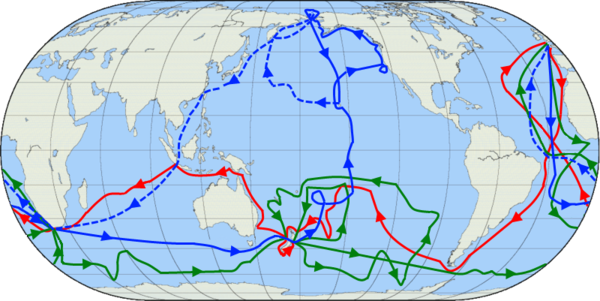
  • …lived from 1720 to 1770 (?)

600px-Cook_Three_Voyages_59

Do you think I did better or worse than I did with Florence Nightingale?  Let’s see:

  • …was a navy man TRUE
  • …was an explorer TRUE
  • …was killed in Hawaii (?) TRUE
  • …sailed all the way around Australia (?) FALSE (this was actually the achievement of Matthew Flinders)
  • …explored much of the Pacific Ocean TRUE
  • …was from the UK TRUE
  • …lived from 1720 to 1770 (?) CLOSE; the actual dates are 1728-1779

What I missed about Cook is his cartography (especially around Newfoundland) and his circumnavigation of New Zealand.  I did correctly remember that the Hawaiians killed him for some reason.

If you’d like to play, here are some suggested topics.  I tried to pick some that most people wouldn’t know all that much about.

  • Michelangelo
  • The Battle of Kursk
  • J. S. Bach
  • Coriolanus, by W. Shakespeare
  • The kangaroo
  • T. S. Eliot

Good luck!

Read Full Post »

« Newer Posts - Older Posts »